Identify ADHD Patterns and Solutions
Test Yourself
Online ADHD Test for Adults: Quick Quiz for Self-Assessment
 A Comprehensive Guide to the ADHD Assessment for Attention and Behavior
New Updates

A Comprehensive Guide to Online ADHD Testing for Adults
Understanding How Modern Adults Approach Remote Screening and Why It Works
Many adults reach a tipping point where forgetfulness, time blindness, or...

Living Well With ADHD in Adulthood: Strengths, Strategies, and Science
What ADHD Looks Like in Adults Today
Many people first encounter attention-deficit/hyperactivity disorder in the context of school, yet the condition...

Navigating ADHD in Women: Signs, Strengths, and Support That Works
Understanding How ADHD Presents in Women
Attention and executive function challenges show up differently across gendered experiences, often leading t...
Online ADHD Assessment Test
Get StartedUnlock Your Attention Profile With Our Accurate ADHD Self-Test
Modern life asks a lot of the adult brain, and it is no surprise that many people look for clear, quick ways to understand persistent focus, planning, and impulsivity hurdles. For many busy people balancing work, family, and health, options like online ADHD testing for adults provide a discreet doorway to clarity. These evaluations weave together structured questions, behavior inventories, and context-specific prompts to illuminate patterns that might otherwise be dismissed as stress or overwork. Compared to hurried clinic visits, modern ADHD testing platforms can capture patterns across multiple contexts. The goal is not a label for its own sake, but a pragmatic map that helps you navigate decisions about documentation, accommodations, coaching, or clinical care.
Reliable tools emphasize user-friendly interfaces, validated questionnaires, and clear next steps so you know what to do after seeing a score. Some sites start with a lightweight ADHD quiz that screens for attentional drift and impulsivity. More robust systems expand on that snapshot with standardized rating scales and optional informant forms to compare self-perceived challenges with observations from a partner or colleague. Beyond scoring, good platforms also translate findings into practical actions, such as habit-building strategies, cues for time management, and suggestions for professional consultation.
- Clear instructions help you answer consistently and avoid response bias.
- Contextual examples turn abstract criteria into everyday scenarios.
- Privacy controls and data transparency build trust from the first click.
- Progress tracking shows whether new routines are improving focus over time.
Benefits, Limitations, and How to Choose a Quality Platform
The strongest digital tools balance accessibility with scientific rigor, making it easier to get directional insights without long waitlists or travel. Workplace challenges come up frequently when discussing adult ADHD because sustained focus is demanded. Many platforms now integrate coaching tips, habit systems, and referral directories so that results translate into concrete change instead of a static number. Many providers extend education for ADHD online through secure portals and apps. When selecting a service, examine the evidence base for its questionnaires, look for transparent references, and check whether your results will be reviewed by a qualified professional who can contextualize scores with your history.
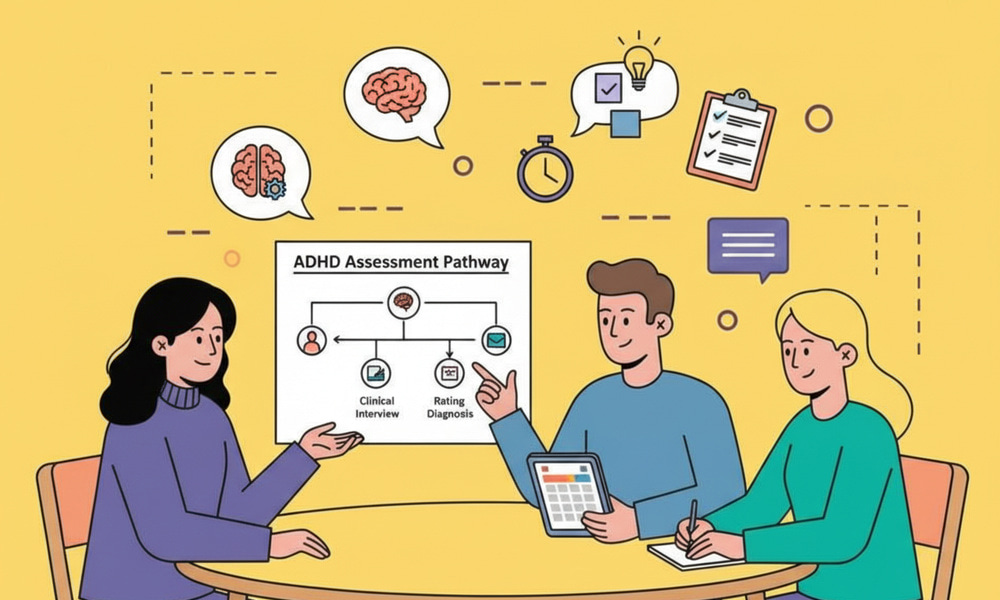
Digital screening is a starting point, not a substitute for a nuanced clinical conversation in complex situations. A comprehensive ADHD assessment typically blends rating scales with interviews and history. Self-report alone can miss co-occurring issues such as anxiety, sleep disruption, or learning differences that mimic or magnify inattention. Solid platforms acknowledge these caveats and guide you toward appropriate follow-up when red flags appear. The best choice often pairs fast insights with a humane roadmap, reminding you that attention is shaped by environment, health, and supports, not just personal willpower.
- Look for published validation and clear scoring explanations.
- Confirm encryption, consent language, and data retention policies.
- Prefer services that explain limits and recommend next steps.
- Ensure accessibility features such as readable fonts and audio options.
Preparation, Step-by-Step Experience, and Tools You May Encounter
Set yourself up for accurate results by choosing a quiet time, minimizing interruptions, and answering based on typical weeks rather than outliers. One widely cited instrument, the adult ADHD self-report scale, helps capture the frequency of behaviors across contexts. You may also be asked about early life patterns, work or academic performance, and how often forgetfulness or disorganization interferes with daily tasks. In family settings, the Vanderbilt ADHD assessment can gather observations from multiple informants. Before booking an appointment, many people try an informal ADHD self-test to gauge whether patterns are persistent.
| Tool Type | What It Captures | Best Use Case |
|---|---|---|
| Self-report checklist | Frequency of core attention and impulse behaviors | Quick personal screening and progress tracking |
| Observer rating form | External perspective from partner, friend, or colleague | Triangulating behaviors across contexts |
| Structured interview | History, onset, impairment, and differential factors | Clinical confirmation and nuanced treatment planning |
Expect a straightforward flow: demographic questions, behavior frequency items, context prompts, and sometimes optional cognitive tasks. Results pages should translate scores into plain language, clarifying which domains show the most friction and which routines might reduce friction quickly. You will get the most from your time if you keep notes on sleep, stressors, and nutrition in the week prior, since these factors can nudge attention up or down. A thoughtful process invites self-compassion alongside data, reminding you that patterns are understandable and change is possible.
- Use consistent time frames when answering, such as “the past six months.”
- Invite a trusted observer for added perspective when appropriate.
- Save a PDF of results to discuss with a clinician or coach.
- Revisit screening after habit changes to see whether interventions help.

Making Sense of Scores, Building a Plan, and Moving Forward
Numbers are only meaningful when turned into actions that fit your life and values, so start by identifying two friction points you can address this week. After you interpret a report, clinics may coordinate a continuum that includes online ADHD treatment alongside coaching. If your score crosses a threshold, a clinician may administer a formal ADHD test to confirm patterns. You may also consider simple environmental upgrades, task batching, visual timers, and calendar automation to reduce cognitive load while you pursue longer-term care.
Budget and access often shape first steps, and it helps to compare low-cost tools with professional evaluation to plan a realistic timeline. For cost-conscious readers, a carefully designed free online test for ADHD can serve as a first-pass screen. When results suggest deeper exploration, document real-world impacts, such as missed deadlines or misplaced items, because functional examples help professionals calibrate severity. Collaboration remains the theme: involve your workplace, household, or study community so new systems stick, and revisit your plan monthly to refine what works.
- Translate one high-need area into a daily routine you can track.
- Prioritize sleep and movement to stabilize attention basics.
- Share findings with supportive people who can hold gentle accountability.
- Schedule follow-ups to iterate rather than wait for motivation spikes.
Online ADHD Assessment Test
Get StartedFrequently Asked Questions
-
How accurate are online screeners compared to in-person evaluations?
Validated screeners can be highly informative, particularly when items map closely to diagnostic criteria and are interpreted with context. Caregivers often ask how child ADHD symptoms differ from adult presentations in daily routines. Digital tools are strongest as gateways that flag patterns and guide you toward clinicians who can evaluate co-existing issues, timing of onset, and real-world impairment with nuance.
-
Will my data be safe if I complete a web-based questionnaire?
Reputable services display encryption standards, consent terms, and data retention policies in plain language. In many clinics, screening for ADHD in women highlights masking, hormonal shifts, and sensory load. Look for platforms that allow you to export or delete records, and avoid any service that cannot answer basic security questions clearly.
-
Can lifestyle changes help while I decide on next steps?
Small, repeatable routines can reduce friction quickly, especially when tied to cues that already exist in your day. Teachers sometimes request resources for ADHD in children so classroom supports align with home routines. Start with sleep consistency, movement you enjoy, and a calendar you actually see, then layer task batching and reminder systems to consolidate gains.
-
How long does an online screening usually take?
Most self-report tools take 5 to 20 minutes, depending on the number of items and whether you add observer forms. Time varies with reading speed and how much reflection you need to answer accurately. You can often pause and resume, which is useful if distractions pop up or you prefer to complete sections in shorter bursts.
-
What should I bring to a follow-up appointment after an online screen?
Bring your results, notes on typical weeks, and examples of functional impacts such as missed deadlines or misplaced items. Include a short history of school or work challenges, plus any medical details like sleep issues or past injuries. Concrete stories help professionals translate scores into plans that actually fit your environment and goals.